
The Hanover Owner-of-Record Card and Its Fields
Finding who owns a property in Hanover County starts with the parcel roll. But a fresh sale can leave that roll a step behind the deed. The owner of record shown there may reflect an older transfer. So pair the live parcel entry with the newest recorded instrument for the same land. An address or GPIN gets you started. And a careful current-owner search compares both records before settling on a name. Keep in mind that mailing and situs addresses often differ. Title may also sit with an LLC, a trust, or an estate. When names disagree, the Clerk's recorded deed is the confirmation that settles it.
| Owner name | The live roll's owner field, when displayed |
|---|---|
| Mailing address | Where tax mail is sent, which may be away from the parcel |
| Situs and GPIN | Physical location and parcel key for cross-checks |
| Subdivision / lot | Map and plat context for the land record |
| Deed book/page | A lead to the Clerk's recorded instrument |
| Assessment date | Annual roll context, not a live closing timestamp |
The county's sample eTRAKiT card shows the parcel-side references. These include a GPIN, a subdivision, and a deed book and page. It cannot establish the present grantee by itself. The live CivQuest application holds the exact owner field. If that field is missing or stale, the latest deed answers the question. Remember that the mailing address is only where tax notices go. It does not prove the owner lives on the land.
Hanover Current Owner Data Refreshes Monthly
Hanover County refreshes its parcel and GIS map data every month. No fixed lag exists between a closing and a new owner-of-record entry. A deed can reach the Clerk before the next parcel refresh lands. The tax roll adds its own wrinkle. A tax bill still goes to whoever held title on January 1. When the county roll and a recent sale seem out of step, let the newest Clerk recording date serve as your marker.
A name can still show on the parcel card. That is not proof of the current grantee. Compare the grantor, grantee, GPIN, legal description, and instrument date before you trust the match. If any doubt remains, the Assessor can say which roll record is live. The Clerk can then verify the recorded deed itself.
Use the Hanover GPIN Before Trusting a Name Match
A GPIN is the practical cross-reference for any Hanover County current-owner check. The eTRAKiT sample for 9495 Atlee Road shows Mechanicsville, VA 23116, GPIN 7796-94-6872, subdivision Atlee, acreage, zoning, school and tax-rate fields, and deed book/page 3428/737. Those identifiers let you pull the matching parcel record and the latest deed in Hanover County property records. The public sample does not display the dynamic owner card, though. Use it to identify the land, not to declare who owns it today. Open the sample property record to see the kind of parcel references eTRAKiT provides.
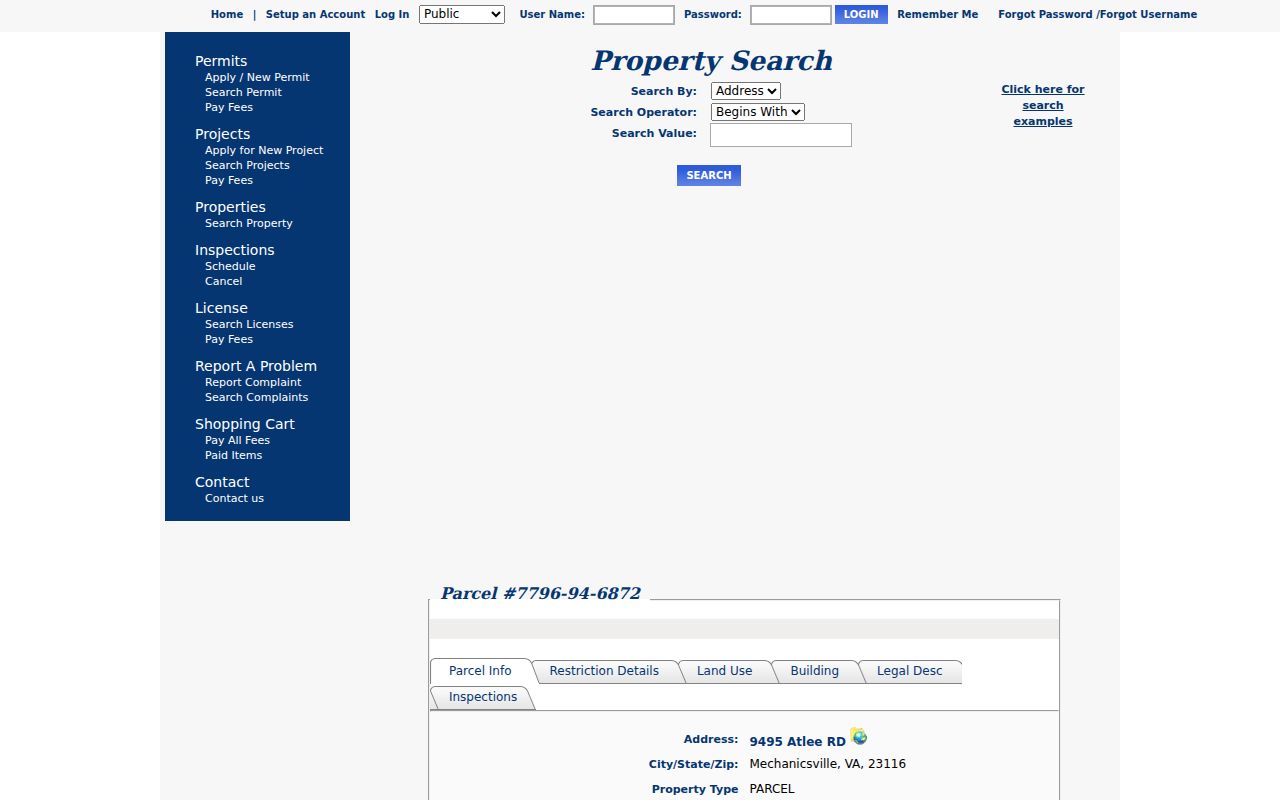
The sample offers one cross-reference example. For the current owner name, the Assessor's live card and the recorded deed remain the records to check.
Confirm Hanover's Current Owner with the Latest Deed
The roll is only a starting point. When the present grantee must be confirmed, the recorded deed is the legal instrument to compare. Hanover Self-Service offers free indexes. Document images run through SRA or a paid copy route. Treat the parcel-card owner name as a possible grantee. Search the index for the newest instrument. Then compare its full legal description against the property card. A book and page or instrument number lets you retrieve the image. Keep a precise deed-record reference.
- Locate the parcel by address, subdivision, or GPIN and note the current roll name and mailing address.
- Search the Clerk's index for the latest deed, then read the grantee and vesting language.
- Compare the recorded legal description, GPIN, date, and deed reference with the parcel card.
- If an entity is named, use SCC records to understand its status and agent, while keeping the deed as title evidence.
- Roll owner
- The party shown on the current public assessment record.
- Vesting
- The way the deed states title is held by one or more grantees.
- Registered agent
- A company's state-listed service contact, not necessarily its landowner.
Hanover Current Owner and Mailing Address Are Different Fields
A situs address marks the parcel's physical spot on the map. A mailing address directs tax notices. It may belong to an owner who lives elsewhere, a business, a trust, or an estate. That split is routine in Hanover County property records. It is not proof that the person named on the bill occupies the parcel. Keep both addresses beside the GPIN. That way a letter, a tax record, and a deed all match the same land.
When the mailing name is an LLC, search the exact entity in Virginia SCC CIS for status and registered-agent information. The agent explains who receives legal notices for the entity. The recorded grantee is still the key owner-of-record clue. A company name and a manager's name can both appear across related deed records.
Keep the situs and the mailing address on separate lines in any tax correspondence. A new deed grantee paired with a January 1 owner on the annual bill usually just reflects different dates and functions. Ask the Treasurer where a payment or credit appears. Confirm the roll entry with the Assessor. Verify the latest recorded transfer through the Clerk's instrument.
Hanover Owners Can Monitor a Name or GPIN
Hanover County rolled out its Recorded Document Alert on July 1, 2025. The service is free. Register a name or a property GPIN. The county sends notice when a matching filing hits the record books. Matches can span land records, financing statements, judgments, wills, and fiduciary filings. An alert stops nothing on its own. It cannot block a filing or prove fraud. Treat it as a flag rather than a finding. When one arrives, pull the actual recording through the Clerk. Then compare its parties and legal description with the parcel you track. The County alert page lays out the match types and how the notice works.
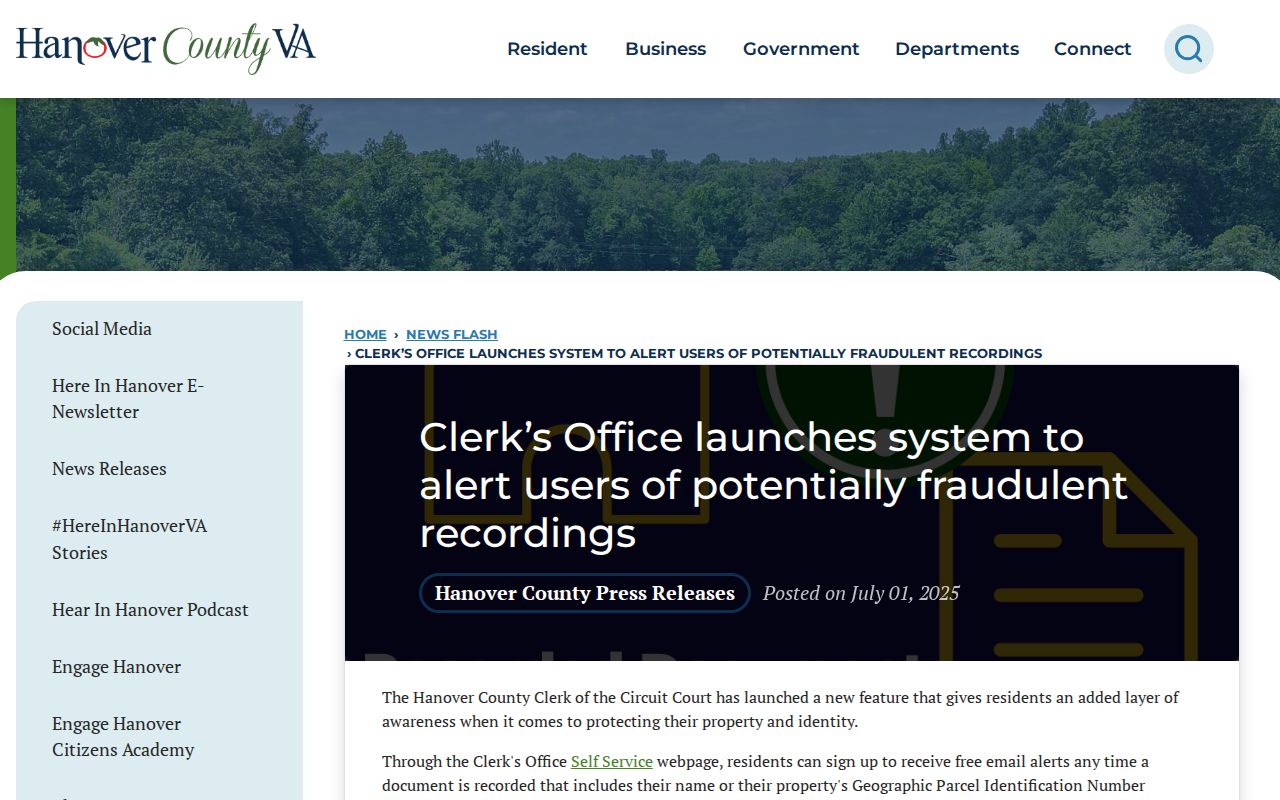
A notification tells you to read the instrument. It is never a stand-in for reading it.
Hanover Current Owner Details Have Public-Record Limits
Owner details in Hanover County public records have real limits. Virginia law shields some information even when the parcel file itself is open. Safe at Home participants may rely on substitute addresses. Court or vital records can also be sealed, redacted, or restricted. Never use a parcel search to guess a protected residence from some other record. If the county leaves a field unpublished, respect that line. Ask the custodian instead about what is lawfully open. A current-owner check serves narrow aims. It supports due diligence, a deed question, tax correspondence, or a house-history project. A tax roll entry proves ownership of record. It does not prove occupancy. It must never be used to target or intimidate anyone. The Clerk's free Recorded Document Alert covers a name or a GPIN. Covered filings include land records, financing statements, judgments, wills, and fiduciary documents. Every result still demands document review. A matching name may belong to someone else entirely. A GPIN match is only the start. Check the legal description and the instrument parties before treating it as a parcel transfer.
What a Hanover Current Owner Record Cannot Prove
An owner-of-record result answers one question only. It cannot prove who lives at a property. It cannot settle a boundary dispute. Nor can it promise that every later instrument was indexed. Timing matters too. The data refreshes monthly, and the tax roll is a January 1 snapshot. Verify a legal transfer in the Clerk's deed record. Settle a boundary with the recorded plat and survey work. For the wider address-to-owner route, see the Hanover ownership lookup method.
Lawful use. Use public ownership records for property research and legitimate correspondence. Do not use a name or mailing address to stalk, harass, threaten, or harm anyone.